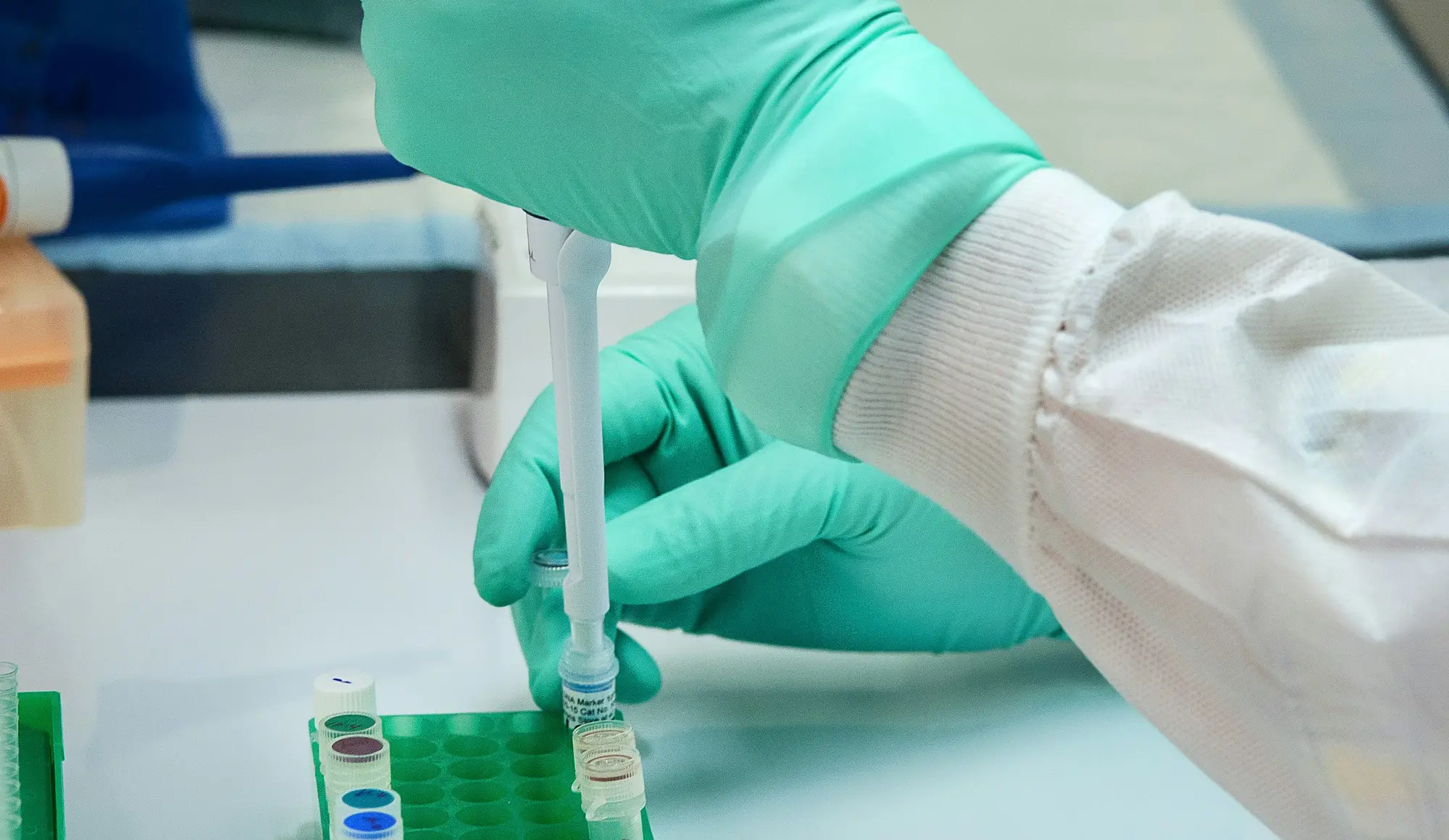
Upstream wet-lab work that every sequencing project depends on, extraction, amplification and quantification, performed to publication-grade quality standards.
Extraction quality decides everything downstream. Providers on the Gateway run column-based, magnetic-bead and phenol-free protocols matched to the sample matrix, blood and buffy coat, fresh or FFPE tissue, cultured cells, leaf and seed material, soil, biofilm and pure cultures. For long-read projects, dedicated high-molecular-weight protocols preserve 50 kb+ fragments instead of sheared gDNA, which directly determines read N50 and assembly contiguity. Extraction is quoted as a line item so you can compare it transparently across labs.
Sample history (storage, fixatives, shipping conditions)
Target application (short-read, long-read, qPCR)
What you get back
Purified DNA at declared concentration
A260/280 & A260/230 purity report
Qubit dsDNA quantification
Size distribution / integrity check where required
02
RNA Extraction
RNA projects fail at extraction more often than anywhere else, degradation starts within minutes of sampling. Gateway labs specify stabilization (RNAlater, TRIzol, snap-freezing) and run column or magnetic workflows with on-column DNase digestion. Integrity is scored on the Bioanalyzer/TapeStation scale (RIN or RINe); most sequencing applications need RIN ≥ 7, and providers state their acceptance threshold before you ship.
Total RNA / mRNARIN integrity QCDNase-treated
What the lab needs
Fresh, stabilized or frozen sample
Organism and tissue type
Downstream application (RNA-seq, RT-qPCR)
What you get back
Purified RNA at declared concentration
RIN/RINe integrity score
DNase treatment confirmation
Purity report
03
PCR
Standard endpoint PCR remains the workhorse for targeted work: amplifying a locus for Sanger confirmation, producing barcode amplicons (COI, ITS, rbcL, 16S), verifying plasmid inserts and preparing targeted panels. Providers can design and optimize primers, including touchdown and gradient protocols for GC-rich or low-template targets, and deliver gel-verified, cleanup-ready amplicons.
Primer designAmplicon prepGC-rich & low-copy
What the lab needs
Template DNA or source material
Target locus / primer sequences (or design request)
Purpose of amplification (Sanger, cloning, QC)
What you get back
Purified amplicon
Gel image / size verification
Primer sequences and conditions used
04
qPCR / Quantitative PCR
Real-time quantitative PCR is the reference method for targeted quantification: relative gene expression (ΔΔCt), absolute copy number against a standard curve, pathogen load, GMO screening and assay validation before larger sequencing work. Providers run SYBR Green or hydrolysis-probe (TaqMan) chemistry in single- or multiplex formats, with melt-curve and efficiency reporting.
Gene expressionPathogen detectionTaqMan / SYBR
What the lab needs
Extracted RNA/DNA or raw samples
Target genes / pathogens
Reference genes or standards where applicable
What you get back
Ct/Cq values per sample
Standard curve & amplification efficiency
ΔΔCt expression tables
Melt curves and QC flags
Ready to post your request?
Verified labs quote independently, compare price, turnaround and scope side by side.